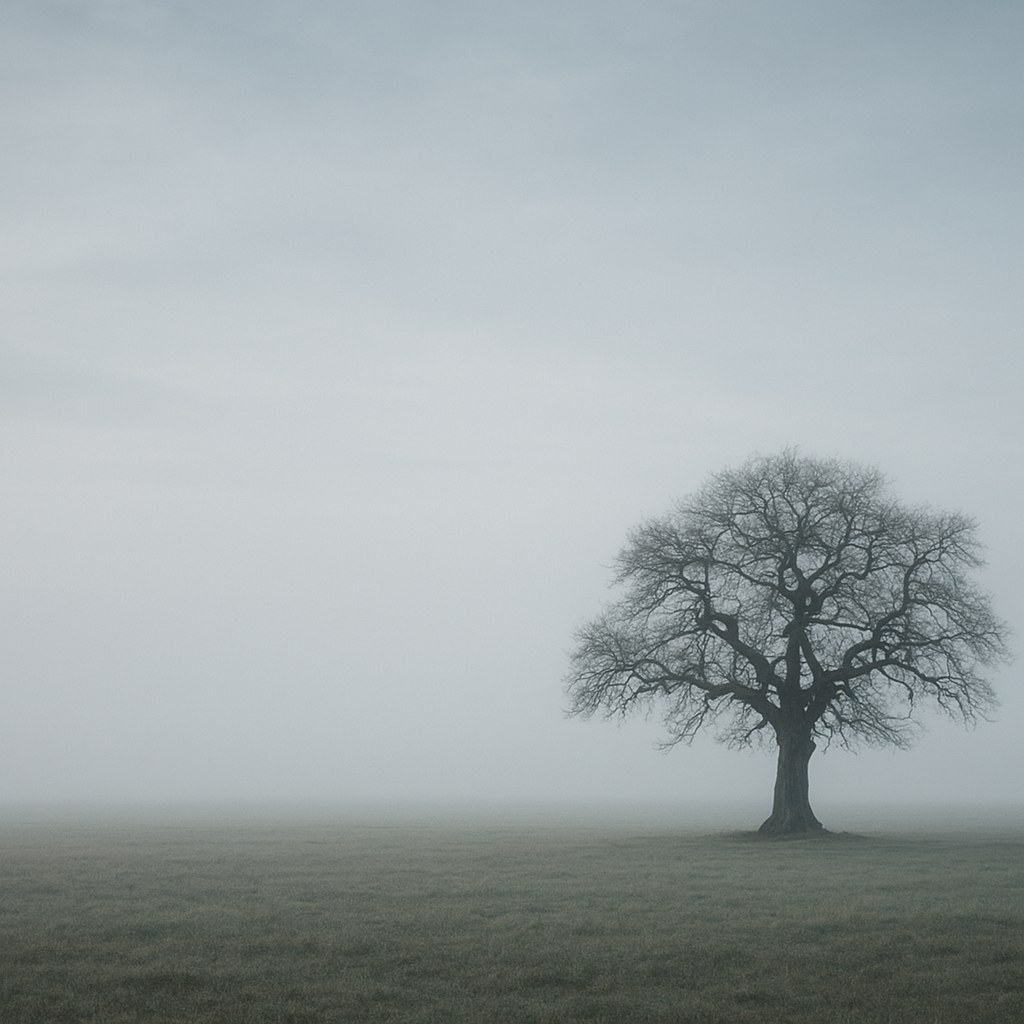
Walk into any photography exhibition, scroll through any curated Instagram feed, or flip through a high-end magazine, and you’ll notice something striking: the images that stop you mid-scroll aren’t necessarily the busiest ones. More often than not, they’re the photographs with room to breathe. A lone figure against a foggy field. A single window on an otherwise blank wall. A tree silhouetted against an enormous sky. This is the power of negative space, and in minimalist photography, it’s the difference between a snapshot and a statement.
Negative space might be the most misunderstood tool in a photographer’s compositional toolkit. Beginners often assume it’s wasted space, dead air, or emptiness that needs filling. Experienced photographers know better. That “empty” area is doing heavy lifting, directing the eye, amplifying emotion, and transforming ordinary subjects into compelling visual stories. Understanding how to harness it is what separates photographers who document from photographers who create.
What Is Negative Space in Photography?
Negative space refers to the area surrounding your main subject. It’s the empty or relatively uncluttered region that gives your subject context through contrast. The subject itself occupies what’s called positive space. Everything else, the blank sky, the smooth wall, the calm water, the soft blur of a defocused background, is negative space.
The concept originates from fine art and graphic design, where it’s been used for centuries. Japanese ink paintings embraced it. Mid-century modernist poster designers weaponized it. When photography adopted the principle, it found perhaps its most natural home. Unlike painters who add elements to a blank canvas, photographers subtract from an already chaotic world. Choosing what to leave out becomes the fundamental creative act.
What makes negative space so powerful is the tension it creates. When a subject occupies only 10 to 20 percent of the frame, the viewer’s eye has nowhere else to go. That isolation forces engagement. The photograph demands interpretation rather than simply presenting information. It asks a question instead of delivering an answer, and that interaction is what makes minimalist images linger in the mind long after busier photographs fade.
Why Negative Space Dominates Visual Storytelling
The human brain is wired to seek simplicity. Studies in cognitive psychology consistently show that cluttered visual information increases cognitive load and decreases retention. A frequently cited principle in visual design holds that viewers process images with clear focal points and generous negative space faster and remember them longer. In an era where the average person encounters thousands of images daily, photographs that reduce visual noise cut through the static.
But the appeal goes deeper than processing efficiency. Negative space carries emotional weight. A small figure dwarfed by an expansive landscape communicates loneliness, humility, or awe. A product photographed against a vast white background conveys elegance, precision, and premium quality. Apple’s advertising campaigns built an entire brand identity on this principle. Their product shots rarely include anything beyond the object itself and a clean backdrop, and the approach became one of the most imitated visual strategies in commercial photography.
The emotional spectrum of negative space is surprisingly broad. It can feel peaceful or unsettling, liberating or isolating, sophisticated or stark. The difference lies in how you balance the elements, where you place the subject, and what the negative space itself contains. A fog-shrouded field behind a lone runner reads differently than a harsh white void behind the same figure. The space isn’t truly empty. It’s a narrative element with its own texture, tone, and temperature.
How Negative Space Relates to Composition
If you’ve ever asked, “What is composition in photography?”, the simplest answer is this: composition is the deliberate arrangement of visual elements within the frame. Negative space is one of the most powerful arrangement tools available because it doesn’t just organize what’s there. It gives meaning to what’s there by controlling what surrounds it.
Traditional composition rules like the rule of thirds work hand in hand with negative space. Placing a subject on one of the thirds intersection points automatically creates asymmetric negative space, which tends to feel more dynamic than centered compositions. But minimalist photography often pushes further. Some of the most striking minimalist images place the subject at the extreme edge of the frame or even partially outside it, using the overwhelming dominance of negative space as the compositional statement itself.
Lines, Direction, and Breathing Room
Related searches frequently ask about lines in photography and leading lines in photography, and these elements interact with negative space in fascinating ways. Leading lines are traditionally used to guide the eye toward a subject. In minimalist work, negative space often replaces or simplifies leading lines. The vast emptiness itself becomes the guide, creating a visual vacuum that pulls attention toward whatever small element exists within it.

When lines do appear in minimalist compositions, they gain extraordinary power. A single horizon line stretching across an otherwise empty seascape becomes monumental. A diagonal shadow cutting across a blank wall turns into the photograph’s entire narrative. The less competition a line has, the more the viewer invests in following it.
Direction matters too. Photographers working in cultures that read left to right often place subjects on the left side of the frame, giving them “room to move” into the negative space on the right. This creates a sense of forward motion and anticipation. Reversing that placement, putting the subject on the right facing left, can evoke tension, hesitation, or retrospection. These are subtle effects, but they operate on a subconscious level that shapes how viewers emotionally receive the image.
Background as Negative Space
Questions about the background in photography often focus on depth of field and blur, but in minimalist work, the background frequently becomes the entire negative space. A clean, uniform background isn’t just a backdrop. It is the composition. This is why minimalist photographers are obsessive about backgrounds. A single distracting element, a stray branch, a power line, a patch of discolored sky, can shatter the entire effect.
The best minimalist backgrounds share a few qualities: tonal consistency (either uniform or smoothly graduated), minimal texture (or texture so uniform it reads as a single surface), and a color relationship with the subject that creates clear separation. A dark subject against a light background or a warm-toned subject against a cool-toned backdrop ensures the eye locks onto the positive space immediately.
Elements of Composition That Amplify Negative Space
Understanding the elements of composition in photography helps you deploy negative space with intention rather than accident. Here are the elements that work most powerfully alongside negative space in minimalist photography:
- Color: In minimalist frames, color becomes monumental. A red door on a white wall isn’t just a door. It’s the entire photograph. Limit your palette to one or two colors and let the negative space serve as the neutral canvas that makes them sing.
- Scale: Extreme scale contrast is one of minimalist photography’s most reliable techniques. A tiny human figure against a massive sand dune or an enormous sky creates instant drama. The subject’s smallness is amplified by the space around it.
- Shape and geometry: Clean geometric forms, circles, rectangles, triangles, thrive in negative space. Architectural photography exploits this constantly, isolating a single window, arch, or staircase against unadorned surfaces.
- Light and shadow: Hard light casting long shadows across empty surfaces creates minimalist compositions that feel almost abstract. The shadow itself becomes positive space, while the illuminated area around it functions as negative space.
- Texture contrast: A rough, detailed subject against a smooth, featureless background creates tension through textural opposition. The negative space doesn’t just surround the subject. It defines the subject’s tactile qualities by contrast.
Practical Techniques for Shooting with Negative Space
Knowing the theory is one thing. Executing it in the field, with real-world chaos pressing in from every edge of the viewfinder, is another. Here are actionable techniques that consistently produce strong minimalist images:
Simplify Before You Shoot
The most important skill in minimalist photography happens before you press the shutter. Train yourself to scan the edges of your frame as carefully as you examine the subject. Anything that doesn’t contribute to the image should be excluded, either by repositioning yourself, changing your focal length, or adjusting your angle. This sounds obvious, but it’s remarkable how many photographers focus so intently on the subject that they forget the frame has borders.
Use Longer Focal Lengths
Wide-angle lenses invite clutter. They capture everything. Telephoto lenses, particularly those in the 85mm to 200mm range, naturally compress scenes and isolate subjects. They make it easier to crop out distractions in-camera and create the flat, graphic quality that minimalist compositions often benefit from. Shooting a distant subject against a plain background with a 135mm lens can produce striking minimalist images that a 24mm lens would render as cluttered snapshots. If you’re unsure which lenses suit your style, our guide on choosing the right camera gear breaks down the decision process.
Embrace Weather and Atmosphere
Fog, snow, rain, and overcast skies are the minimalist photographer’s best allies. These conditions naturally simplify scenes, muting colors, obscuring backgrounds, and creating vast fields of tonal uniformity. A landscape that looks chaotic on a clear summer day transforms into a minimalist masterpiece in heavy fog. Don’t wait for perfect weather. Seek out imperfect conditions that do your compositional work for you.
Shoot Up or Shoot Down
Changing your perspective is the fastest way to find negative space. Pointing your camera upward uses the sky as a massive, clean negative space. Pointing downward uses the ground, water, or floors in the same way. Both angles eliminate the cluttered middle ground that makes eye-level compositions so difficult to simplify. Some of the most effective minimalist photography is shot looking straight up at architecture or straight down at shadows on pavement.
Common Mistakes That Undermine Minimalist Photography
Minimalist photography looks deceptively simple. Strip away enough elements, and what’s left should be beautiful, right? Not quite. Here are the pitfalls that separate amateur attempts from professional results:

- Confusing empty with boring: Negative space needs to have some quality, a tonal gradient, a subtle texture, a color temperature, that makes it feel intentional rather than blank. Pure white voids rarely work unless they’re deliberately graphic. The best negative space has a quiet presence of its own.
- Weak subject matter: When your subject is small in the frame, it needs to be visually compelling enough to justify its isolation. A random fire hydrant in an empty parking lot isn’t automatically art. The subject should have intrinsic interest, whether through shape, color, position, or conceptual weight.
- Ignoring the edges: Minimalist compositions live and die at the borders of the frame. A partially cropped element at the edge of the image, a hint of a building, a sliver of a tree, creates a distraction that’s amplified by the surrounding emptiness. Be ruthless about what touches your frame edges.
- Over-post-processing: Heavy-handed editing, excessive contrast, crushed blacks, oversaturated skies, can make minimalist images feel artificial. The best minimalist photography retains a natural quality that lets the composition speak for itself. Subtlety in processing mirrors the subtlety in composition.
How Negative Space Elevates Different Photography Genres
While minimalist photography is its own genre, negative space enhances virtually every photographic discipline. Portrait photographers use it to convey mood and give subjects psychological room within the frame. Landscape photographers rely on it to create scale and drama. Street photographers use it to isolate moments of human behavior against urban geometry. Product photographers depend on it to communicate brand values like quality, cleanliness, and sophistication.
Wedding and event photographers increasingly incorporate negative space into their work, creating images that feel editorial and timeless rather than documentary. A couple positioned at the bottom of the frame with a vast landscape or sky above them tells a story about the scale of their commitment, the openness of their future, in a way that a tight, conventional portrait cannot.
Even in photojournalism, where the instinct is often to pack the frame with information, strategic use of negative space can heighten emotional impact. A single protester against an empty wall. A disaster survivor standing in a cleared field. These images carry weight precisely because of what isn’t in them.
Training Your Eye for Negative Space
Like any photographic skill, seeing negative space takes practice. The good news is that the training exercises are simple and can be done anywhere, even without a camera. Start by looking at everyday scenes and mentally cropping out everything except one element and its surrounding space. Notice how the relationship between subject and emptiness changes as you adjust that mental frame.
When you do have a camera in hand, try this exercise: photograph the same subject five times, each time making the subject smaller in the frame. Start with the subject filling 80 percent of the image and work down to 10 percent. Review the series and notice at what point the balance shifts from a photograph of something to a photograph about space, isolation, or scale. That transition point is where negative space begins to dominate, and understanding where it falls for different subjects is crucial to developing your minimalist instincts.
Study the work of photographers who excel at negative space. Michael Kenna’s stark, long-exposure landscapes. Chema Madoz’s surreal object studies. Akos Major’s geometric architectural compositions. Analyze how they balance positive and negative space, where they place their subjects, and how they use tonal relationships to create separation. Then go out and emulate, not to copy, but to internalize the principles through practice.
Conclusion
Negative space is not absence. It is presence of a different kind. In minimalist photography, the empty areas of the frame carry as much compositional weight as the subject itself, shaping how viewers emotionally engage with the image, directing attention, and creating visual impact that busy photographs simply cannot match.
The core principles are straightforward: simplify ruthlessly, choose subjects that can carry the weight of isolation, pay attention to the quality of your negative space rather than treating it as a void, and use focal length, perspective, and atmospheric conditions to your advantage. Avoid the common traps of confusing emptiness with artistry, neglecting frame edges, and over-processing your images.
Perhaps most importantly, recognize that negative space is a skill, not a style. It can be applied to any genre, any subject, any shooting situation. The photographer who masters it doesn’t just make minimalist images. They make stronger images, period, because they’ve learned the discipline of intentional composition, the art of knowing what to leave out, and the confidence to trust that less, executed well, always wins.